Lowest inflation in 4 years, 8 Thai companies on Forbes top SME list & logistics experts call for action.
Lowest inflation in 4 years, 8 Thai companies on Forbes top SME list & logistics experts call for action.
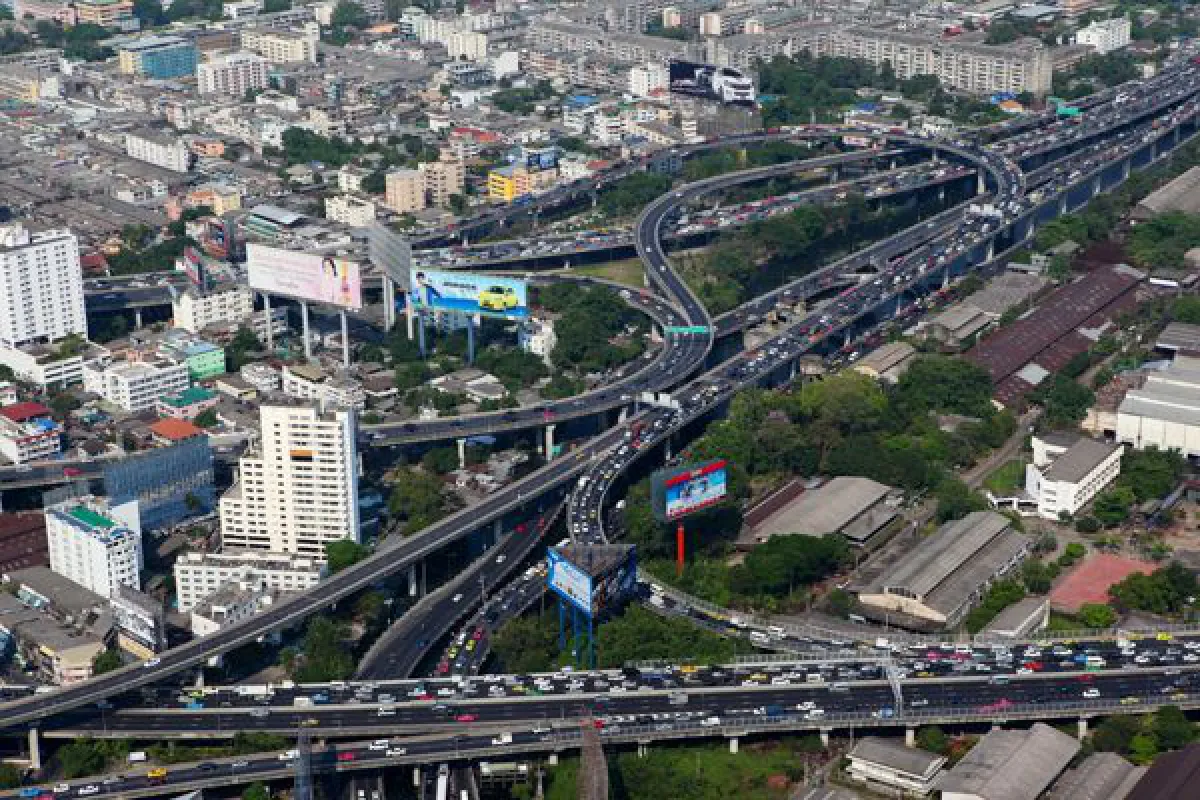
82.6% of goods in the country are carried by road.
Inflation lowest in almost four years
Inflation in July rose only 2% when compared to the same month of last year, making it the lowest monthly rate in 44 months.
Inflation slowed from June's increase of 2.25%, with 2.3% in May, 2.4% in April and 3.6% in December, when the rate was at its highest since November 2011. It has become the lowest inflation since November 2009.
Continued easing inflation was mainly due to the fact that the domestic prices for fresh food, particularly for a number of vegetables, fruit and egg products, started to return to normal because of better weather.
Inflation for food products rose by 2.81% while non-food items increased by 1.6%.
Core inflation, which excludes fresh food and fuel costs was 0.85% in July, with the rate in the first seven months standing at 1.18%, which was within the central bank's target range of 0.5% to 3%.
Eight Thai SMEs on Forbes list
Eight Thai firms are listed in the Forbes Asia Best Under a Billion (BUB) list of the top small- to medium-sized companies in the Asia Pacific region.
The Best Under a Billion list honours 200 leading public companies in the Asia Pacific region with annual revenue between US$5 million and $1 billion. The list is based on criteria such as rising financial performance, sufficiently broad and private share ownership, reasonable debt levels and profitability.
For the overall list, Chinese firms once again dominated while a rising number of Japanese companies also appeared on the list, but the number of Indian companies continued to drop.
Taiwan had the second highest number of companies on the list at 26, three more than the previous year. India came in third with 19 companies, the lowest level since 2007. Two countries dropped off without any representation, Sri Lanka (two listees last year) and New Zealand (one last year). Philippines only managed one company compared to three in 2012.
Australia and Malaysia both had 12 companies, down two from the previous year, whereas Indonesia, with four companies, is down three from last year.
Singapore, with seven companies, is up three more, while South Korea and Vietnam have two more each, at 18 and 10 respectively.
Without massive investment in infrastructure projects, the Thai logistics industry is unlikely to compete with Singapore and Malaysia once regional economic integration takes effect in 2016, experts warn.
The Asean Economic Community will enable regional investors to own up to 70% in logistics businesses ranging from maritime cargo handling and warehousing to freight transport, courier service and customs clearance.
Thailand's logistics costs are expected to remain at 15% of GDP at the end of the year, against 5-6% for Singapore and 10-11% for Malaysia.
According to the National Economic and Social Development Board (NESDB), 82.6% of goods in the country are carried by road, followed by water (9.5%), coastal marine (5.7%), rail (2.2%) and air (0.02%).
Thailand previously achieved a reduction in logistics costs of 2.6 percentage points, from 17.1% of GDP in 2007 to 14.5% in 2011.
The government says the 2-trillion-baht infrastructure plan will cut logistics costs by an additional two percentage points.
The World Bank's Logistics Performance Index 2012 ranked Thailand 38th, far behind leaders Singapore and Hong Kong.
The poor showing was due mainly to Thailand's sluggish approach to road, rail and water transport development.
The country's 11th National Economic and Social Development Plan (2012-16) aims to increase rail transport to 10-15% of total transport.