Fuel subsidies
30 year legacy of subsidies. Most benefits not for the poor. May eventually eat up 10% of govt budget, since subsidies distort prices & use.
30 year legacy of subsidies. Most benefits not for the poor. May eventually eat up 10% of govt budget, since subsidies distort prices & use.

Photo above from the oil and gas price crisis of 2008 when supplies ran out (See articles: #1, #2 and #3).
[Breaking News: (8/09/2011 at 03:28 PM) Prasert Bunsumpun, who steps down as executive chairman and president of PTT tommorrow, invited to help with the government’s energy plan: "to work with the ministry, particularly in restructuring the country’s energy structure and future energy plan, to ensure energy security of the country." (Read article)]
Click button to listen to Fuel Subsidies to download
PTT warns of expanding fuel subsidies by Nareerat Wiriyapong
Blanket energy-price subsidies are expected to cost 5% of the government's fiscal budget, or 129 billion baht, this year, but the proportion could double to 10% by 2020 if current practices continue, according to PTT Plc.
The estimates were based on expected increases in global energy prices as Thailand relies heavily on imports, said Chodechai Suwanaporn, executive vice-president for energy economic policy.
In the current fiscal year, which ends on Sept 30, diesel subsidies will cost 68 billion baht of a 2-trillion-baht fiscal budget.
The expenses for liquefied petroleum gas (LPG) and natural gas for vehicles (NGV) are 36 billion and 25 billion baht, respectively.
If the current subsidies continue, the amount will total 204 billion baht in 2015 and 367 billion baht in 2020, said Dr Chodechai.
"The main beneficiaries of the government's blanket subsidies are not low-income earners, who are supposed to be the main target group," he said
Low-income earners make up only 19% of those who benefit from diesel subsidies and 23% of those benefiting from cheap LPG, he said.
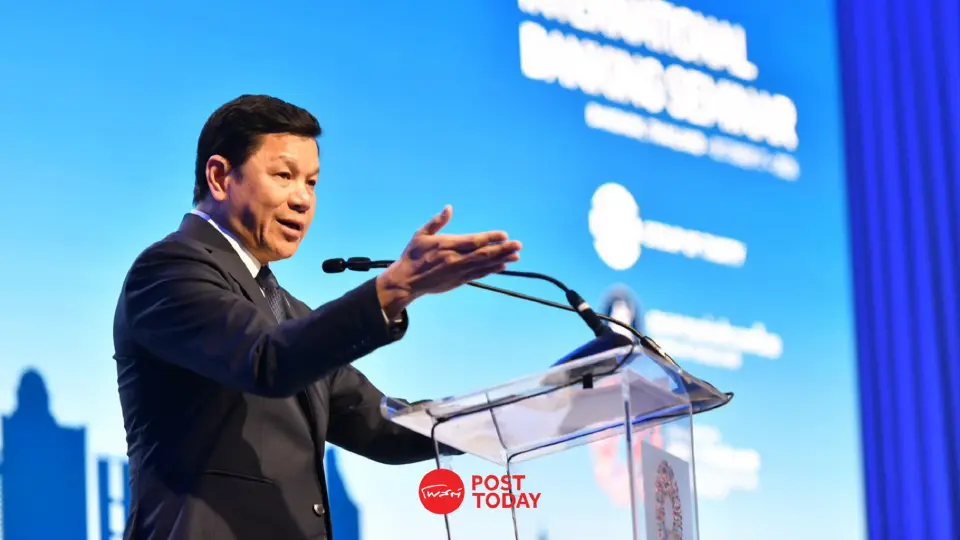
"This is a legacy that has existed for 30 years," Dr Chodechai told a seminar
PTT has recommended the government speedily phase out subsidies for fossil fuels so that Thailand's energy use would not be distorted. For selective groups of consumers and motorists, measures such as discount card or energy credits should be introduced to relieve their financial burden, he noted.
Karujit Nakornsap, deputy permanent secretary for the Energy Ministry, agreed, saying diesel subsidies cost nearly 100 billion baht over the past year including the use of the Oil Fund and the reduction of excise tax.
The subsidy has increased the consumption of diesel, which has been capped at no more than 30 baht a litre since last December under the previous Democrat-led government, to 54 million litres a day at present, compared to 50 million early in 2010, said Dr Karujit.
If this amount is used in infrastructure development, it will be enough to construct 3 1/2 subway lines that would in turn lower the energy consumption," he acknowledged.
I agree that for LPG, we should focus on only specific groups such as household consumers for use as cooking gas," he added.
Dr Karujit also said that subsidies have encouraged the smuggling of petrol to be sold in neighbouring countries. This means the government is losing revenue for nothing.
Indonesia spent the equivalent of 400 billion baht subsidising energy prices. What ensued was skyrocketing petroleum use, transforming the country into a net energy importer and losing its status as an Opec member in 2008, he said.
"Subsidies should be used only for short terms to minimise adverse impacts when global oil prices are so volatile," he noted
Praipol Koomsup, a Thammasat University economist and a member of the central bank's Monetary Policy Committee, urged the government use a managed-float system for energy prices similar to exchange-rate management. Local prices would be mostly dictated by global price movements.
(Source: Bangkok Post, PTT warns of expanding fuel subsidies, 8/09/2011, Nareerat Wiriyapong, link)
Energy Policy Vocabulary
subsidies - when the government pays part of the cost เงินช่วยเหลือ เงินสนับสนุน
fuel subsidies - when the government pays part of the cost of gasoline used in cars, trucks and other vehicles
expanding fuel subsidies - when the government decides to pay more of the cost of gasoline
blanket - to cover something completely
blanket subsidies - subsidies that cover everything
blanket energy-price subsidies - when the government pays part of the cost of all energy goods (oil, natural gas)
Liquefied Petroleum Gas (LPG) - gasoline substitute, less common worldwide than CNG below, but more popular in Thailand because of cheaper vehicle conversion costs (See Wikipedia)
Compressed Natural Gas (CNG) - a substitute for gasoline, diesel, or propane fuel, more environmentally clean alternative and safer in the event of a fuel spill, natural gas is lighter than air, so it disperses quickly when leaked or spilled, used especially by taxis, buses, and trucks (See Wikipedia)
expected - believe will happen คาดว่า (จะเกิดขึ้น)
fiscal - connected with the government budget, i.e., public money เกี่ยวกับงบประมาณ
fiscal year - the one year period on the calendar, used to plan spending in the budget every year
budget - the amounts of money that an organisation has available to spend on different things during a period งบประมาณ (See Wikipedia)
fiscal budget - the yearly (annual) government budget
expected to cost 5% of the government's fiscal budget
proportion - the percentage (one amount as a fraction or percentage of another (example: the population of the capital is 1/10th of the country's population)
double - to become twice as big, twice as much or twice as many เพิ่มเป็นสองเท่า
the proportion could double to 10% - the percentage could double to 10%
current - of the present time ปัจจุบัน
practices - common ways of doing things
current practices - the way of doing things used now
estimates - guesses of what the size, value, amount, cost, etc. of something might be การประมาณค่า
global - throughout the world ทั่วโลกทั้งโลก all over the world, including the whole world
policy - a plan of action to guide decisions and achieve outcomes (See Wikipedia) นโยบาย
vehicles - machines with an engine used to carry people or goods from place to place ยานพาหนะ
beneficiaries - people who receive money and other benefits from some programme
the main beneficiaries - the people who get most benefits from some programme
income - money that people receive from work or some other source, used for household consumption and savings
low-income earners - poor people
target - a goal เป้าหมาย
the main target group - the main group that the activity is directed towards (concerned with, deals with)
benefit - to get help or an advantage from something ผลประโยชน์
legacy - something from the past that continues to exist (examples: his legacy lives on at the company he started, the 20 year old accounting software still in use is the only legacy software still in use at the company)
phase out - end something over a period of time (not immediately)
phase out subsidies - end subsidies over a period of time
fossil fuels - sources of energy such as oil, gasoline and coal
distort - change something into something that is not acceptable or not true
distorted energy use - when people use energy not based on its actual cost (but based on a very cheap subsidized price)
consumers - people who buy things (individuals and families)
measures - actions done to solve a problem มาตราการ
discount card - a card that customers can use to get discounts on goods that they buy
energy credits - an amount of money given to someone (to reduce their monthly bill, for example)
relieve their financial burden - reduce their debt or the amounts of money they have to pay
discount - substract money off
relieve - to help improve a bad situation ผ่อนคลาย, บรรเทา
burden - a responsibility, a difficult thing that must be done, a heavy load to carry ภาระ (See glossary)
excise - dealing with taxes made by a government on some types of goods produced and used within their own country ภาษีสำหรับสินค้าในประเทศ
subsidy - an amount of money that a government or organisation pays to help to reduce the cost of a produce or service เงินชดเชยที่รัฐเป็นผู้จ่ายให้ เงินสนับสนุน
consumption - 1. using, eating or drinking something, 2. goods and services that households buy การบริโภค (See Wikipedia)
the subsidy has increased the consumption of diesel
capped - created an upper limit (no more than this value)
capped at no more than 30 baht a litre
infrastructure - the high-cost facilities that everyone in the economy shares (water, roads, electricity, trains) สาธารณูปโภค
development - the gradual growth and formation of something
focus - think about and work on one thing (rather than waste time on many), concentrate time and attention on one thing ให้ความสำคัญ
we should focus on only specific groups - should spend our time working with certain groups (not everyone)
household - a group of people, often a family, who live together ครัวเรือน
smuggling - bringing goods or people into a country illegally ลักลอบขนสินค้าหรือคนเข้าและออกจากประเทศอย่างผิดกฎหมาย
encouraged - give people strength or reason to do something มีกำลังใจ
subsidies have encouraged the smuggling of petrol to be sold in neighbouring countries
revenue - income from taxes or business activities รายได้
skyrocketing petroleum use - oil use increasing by very large amount quickly
equivalent - the same as เท่าเทียมกันกับ
transforming - changing; making someone or something completely different เปลี่ยนแปลง ปรับปรุงใหม่
transforming the country into a net energy importer
OPEC - the group of major oil exporting countries that join together to control oil prices, the world's largest cartel (See Wikipedia)
cartel - when the producers of some good join together to control prices (to keep prices high) (See Wikipedia)
status - the situation at a particular time; the category or classification of a person, thing, or organization; the state of affairs at a particular time สถานะ official or legal position สถานภาพ
losing its status as an Opec member in 2008 - could no longer participate in OPEC in 2008, because it imported more than it exported
minimise - to reduce something harmful or unpleasant to the smallest amount or degree ลดจำนวนลง ลดให้เหลือน้อยที่สุด
adverse - having a negative or harmful effect on something ในทางลบ, เป็นผลร้าย ในทางตรงข้าม ในทางลบ
impacts - effects on different people and things
minimise adverse impacts - make the bad things that go wrong in some activity, as few as possible
volatile - changing quickly and unpredictably, the public does not know how to react and plan for the future เปลี่ยนแปลงอย่างทันทีทันใดและโดยคาดการณ์ไม่ได้ ที่ปะทุได้ง่าย
global oil prices are so volatile - oil prices around the world change quickly and unpredictably
urged - advised someone very strongly about what action should be taken วิงวอน
managed-float system for energy prices - oil and natural gas prices can go up and down freely, but the government buys and sells to smooth out changes
exchange-rate management - when the central bank buys and sells baht to reduce volatility and smooth movement of the baht (so export businesses and other businesses are not disrupted)
X dictated by Y - X controlled by Y, X determined by Y